
Dental decay: Molar, front tooth & gum line treatment
Expert care designed for older adults and anxious patients. Take care of your oral health comfortably with Dr. Hani Jamah in Santa Rosa.
Damage to the surface of a tooth (enamel) is caused by bacteria producing acids over time. At Valley Dental Surgery & Implant Center, we understand that dealing with tooth decay can be stressful, especially if you feel nervous about dental procedures. We provide a calm, reassuring environment where your comfort and safety come first.
Tooth decay treatment by Dr. Hani Jamah
With extensive clinical experience and his role as an examiner for the Dental Board of California, Dr. Hani Jamah provides precise, gentle, and expert care. Whether you are dealing with a decayed molar, front tooth, or gum line concern, we take the time to explain your options clearly, address your anxieties, and ensure your treatment is completely comfortable.
Doctor:
Dr. Hani Jamah (20+ Yrs)
Office:
Santa Rosa, California
Understanding tooth decay
What is tooth decay?
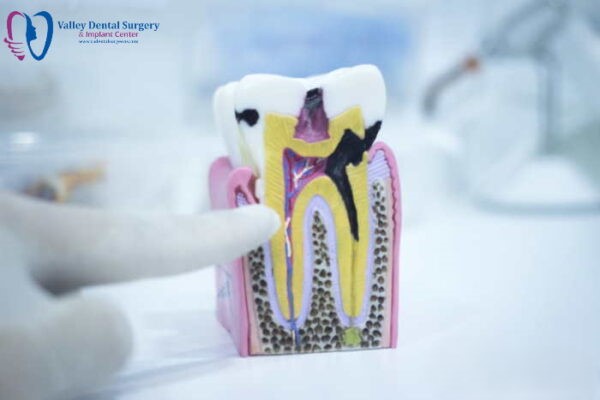
Tooth decay happens when plaque and bacteria build up over time, breaking down the tooth enamel. If left untreated in older adults, it can reach deeper layers, causing sensitivity, pain, or tooth loss.
What is the appearance of tooth decay?
It often appears as white, brown, or black spots on the surface of your molar, front teeth, or along the gum line. In early stages, it might not be visible, which is why regular dental check-ups are important.
What is the cause of tooth decay?
Decay is primarily caused by plaque-producing bacteria feeding on sugars from food, producing acids that weaken the enamel. Dry mouth—common in older adults due to medications—can also increase the risk.
What are the symptoms of dental decay?
toothache
Toothaches are one of the most prevalent, if not the most common, signs of, tooth decay. They keep you up with excruciating pain that is constant and does not have a clear explanation.
Bad breath
This condition is brought on by germs that live in and around your teeth and gums.
Discoloration
There are brown, black, or gray patches on your teeth.
tooth sensitivity
Tooth sensitivity occurs when a person experiences soreness or pain as a result of eating or drinking anything that is either too hot or too cold, too sweet, or too acidic.
What are the stages of tooth decay?
Tooth decay can develop quickly and cause serious problems if not treated promptly and prevented by practicing good dental hygiene. Many people with advanced dental decay require surgical tooth removal, and many of them have additional problems, such as infection.
Stage 1: Initial demineralization
After being subjected to the acids that plaque bacteria produce, the enamel of a tooth will begin to lose its mineral content. When this occurs, a white spot will begin to form on one of your teeth, and you will be able to see it. The first sign of tooth decay is the loss of minerals in this region, which indicates that decay has already begun.
Stage 2: Enamel decay
The condition of the enamel will continue to worsen. It is possible for a white spot on a tooth to change color and become brown. As the enamel on your teeth thins, you run the risk of developing cavities or even tiny holes.
Stage 3: Dentin decay
When decay reaches the dentin in your teeth, you may start to experience sensitivity in those teeth. It's possible that you'll experience this, especially while consuming hot or cold meals or beverages.
Stage 4: Pulp damage
In the event that the pulp is injured, it may develop an inflammation and start to swell. Because they are unable to grow to accommodate the swelling, the surrounding tissues in the tooth may apply pressure to the nerves. This can cause the nerves to become inflamed. It's possible that this will cause pain.
Stage 5: Abscess
When tooth decay reaches the pulp of the tooth, there is a greater chance that bacteria will enter the pulp and cause an infection. As a consequence of increased dental inflammation, you run the risk of developing an abscess, which is a pus-filled pocket that forms at the root of your tooth. When cavities in the teeth become infected with abscesses, the patient may experience terrible pain that radiates to the jaw. A fever, enlarged lymph nodes in the neck, and swelling of the gums, cheeks, or jaw are some of the other symptoms that may be present.
Why are my molars rotting at the gum line?
Molars have deep grooves and pits where food particles and plaque easily get trapped. As we age, gums can naturally recede, exposing the vulnerable root surfaces of molars to bacteria. Without prompt, gentle care, this leads to gum-line cavities and decay.
Can a decayed front tooth be reversed?
If decay is caught in its earliest stage (when it’s just a white spot indicating mineral loss), it can sometimes be remineralized with professional fluoride treatments. However, once a cavity has formed on a front tooth, it requires conservative dental restoration or filling to protect its structure and appearance.
How to relieve pain from a tooth with decay?
Temporary relief can be managed using a warm salt water rinse and over-the-counter pain medication as directed. However, tooth decay will not heal on its own. Visiting Dr. Hani Jamah for a gentle examination allows us to target the root cause safely and provide permanent pain relief.
What is Tooth Decay?
Tooth decay is caused by an accumulation of germs that has been allowed to go untreated for an extended period of time. Your teeth will suffer surface damage as a result of this. Because cavities are so common in children, it is essential to instill in them a healthy oral hygiene routine as early as possible in order to protect their teeth and gums.
What is The Appearance of Tooth Decay?
When tooth decay is in its earliest stages, it may manifest itself as a white spot on the tooth. If there is a darker region or a hole in the tooth, this may be an indication of more severe decay.
Early sign: White spot · Later sign: Darker hole
What Is The Cause of Tooth Decay?
Acid is produced by plaque when it builds up on your teeth, which is the first step in the decaying process. When plaque is allowed to build up, it can lead to a variety of other dental problems, such as dental caries, which are holes in the teeth, gum disease, and tooth abscesses.
Causes: Plaque build-up · Acid production
What are the Symptoms of Dental Decay?
toothache
Toothaches are one of the most prevalent, if not the most common, signs of, tooth decay. They keep you up with excruciating pain that is constant and does not have a clear explanation.
Bad breath
This condition is brought on by germs that live in and around your teeth and gums.
Discoloration
There are brown, black, or gray patches on your teeth.
tooth sensitivity
Tooth sensitivity occurs when a person experiences soreness or pain as a result of eating or drinking anything that is either too hot or too cold, too sweet, or too acidic.
What are the Stages of Tooth Decay?
Tooth decay can develop quickly and cause serious problems if not treated promptly and prevented by practicing good dental hygiene. Many people with advanced dental decay require surgical tooth removal, and many of them have additional problems, such as infection.
Stage 1: Initial demineralization
After being subjected to the acids that plaque bacteria produce, the enamel of a tooth will begin to lose its mineral content. When this occurs, a white spot will begin to form on one of your teeth, and you will be able to see it. The first sign of tooth decay is the loss of minerals in this region, which indicates that decay has already begun.
Stage 2: Enamel decay
The condition of the enamel will continue to worsen. It is possible for a white spot on a tooth to change color and become brown. As the enamel on your teeth thins, you run the risk of developing cavities or even tiny holes.
Stage 3: Dentin decay
When decay reaches the dentin in your teeth, you may start to experience sensitivity in those teeth. It's possible that you'll experience this, especially while consuming hot or cold meals or beverages.
Stage 4: Pulp damage
In the event that the pulp is injured, it may develop an inflammation and start to swell. Because they are unable to grow to accommodate the swelling, the surrounding tissues in the tooth may apply pressure to the nerves. This can cause the nerves to become inflamed. It's possible that this will cause pain.
Stage 5: Abscess
When tooth decay reaches the pulp of the tooth, there is a greater chance that bacteria will enter the pulp and cause an infection. As a consequence of increased dental inflammation, you run the risk of developing an abscess, which is a pus-filled pocket that forms at the root of your tooth. When cavities in the teeth become infected with abscesses, the patient may experience terrible pain that radiates to the jaw. A fever, enlarged lymph nodes in the neck, and swelling of the gums, cheeks, or jaw are some of the other symptoms that may be present.
Why are my molars rotting at the gum line?
Plaque tends to accumulate more quickly in particular areas. Plaque and gaps between teeth, for example, thrive in the grooves and pits of the molars. Plaque can also gather fast along the gumline, and if this plaque is not removed, a gumline cavity will form.
How can tooth decay be treated?
Do fluoride treatments remove decay from tooth?
Fluoride treatments
Fluoride treatments do not remove existing cavities, but they can strengthen weak enamel and reverse very early, microscopic stages of decay before a cavity fully forms. For older adults, regular fluoride applications help protect vulnerable root surfaces.
Can fillings fix a tooth with decay?
Fillings
Yes. Once a cavity has formed, a filling is a safe and effective way to clean out the decayed portion and seal the tooth. We use gentle techniques and materials that blend naturally with your smile while keeping you completely comfortable.
Do crowns protect heavily decayed teeth?
Crowns
When a tooth has experienced significant damage or structural wear, a dental crown provides a strong, protective cover. It restores the full strength and function of the tooth, ensuring you can chew and smile with complete confidence.
Should I get a root canal for my decayed tooth?
Root canals
If tooth decay has reached the inner nerve (pulp) causing deep pain or infection, a root canal is often necessary to save the natural tooth and relieve discomfort. Dr. Hani Jamah ensures this procedure is performed smoothly with safe, gentle care.
Is a tooth extraction a good option for fixing decayed teeth?
Tooth extractions
Extraction is always a last resort when a tooth is too severely damaged to be saved by fillings or crowns. If a tooth must be removed, Dr. Jamah provides expert, pain-free oral surgery, along with seamless tooth replacement options like dental implants.
Can Fillings fix a tooth with decay?
Fillings
When deterioration has advanced past its first stages, it is assisted in being removed by dental fillings.
Do Crowns restore rotting teeth?
Crowns
Repairs teeth whose caries have progressed to an advanced stage.
Should I get a Root Canal for my decayed tooth?
Root canals
Repairs and preserves the life of a severely damaged or infected tooth so that it does not need to be removed.
Is a Tooth Extraction a good option for fixing decayed teeth?
Tooth extractions
This oral surgery removes microorganisms when a tooth becomes infected, injured, or decaying beyond repair.
Can a Decayed Front Tooth be reversed?
Reversing tooth decay is curable if caught early. Just early tooth decay, when it has only affected the enamel, is curable. It is impossible to repair dental decay after it has pierced the enamel and reached the softer core of the tooth.
How to relieve pain from a tooth with decay?
To treat tooth decay discomfort, take an OTC anti-inflammatory such as Advil, Tylenol, eugenol, or Aleve. Avoid foods and beverages that are spicy, cold, sweet, or acidic. Brush and floss gently to keep the region clean.
Schedule Your Gentle Consultation with Dr. Hani Jamah
- Free digital X-rays ($150 value) for accurate diagnosis
- Free new patient consultation ($100 value) to discuss your options comfortably
- Anxiety-free care & sedation options designed specifically for nervous patients and older adults
- We maximize your insurance and Medi-Cal benefits so you pay less out of pocket
At Valley Dental Surgery & Implant Center, led by Dental Board Examiner Dr. Hani Jamah, we believe everyone deserves safe, stress-free, and affordable oral care in Santa Rosa. Whether you need treatment for tooth decay, extractions, or implants, we make the process clear and comforting. Call us at 707-539-6777 to book your visit.
Trusted dental care & tooth decay treatment in Santa Rosa, California
Looking for gentle, senior-friendly tooth decay treatment or oral surgery near you? Valley Dental Surgery & Implant Center is conveniently located in Santa Rosa to serve older adults and patients with dental anxiety. Led by Dental Board Examiner Dr. Hani Jamah, we provide a stress-free environment, transparent insurance processing, and compassionate care tailored to your comfort. Visit our office on the map below or call us today to schedule your consultation.